Waiting in the Wings: How the Understudy Role Forged the Performer I Became
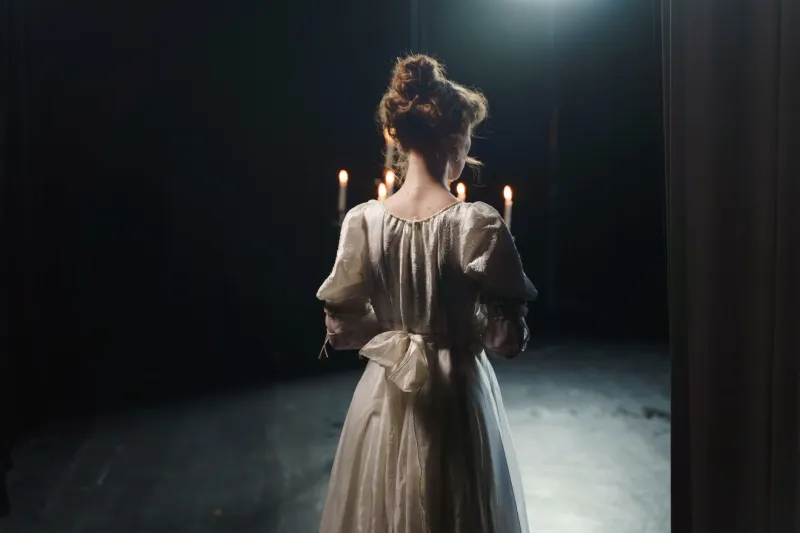
There is a particular silence that belongs only to the understudy. It is not the silence before a curtain rises, charged with anticipation and adrenaline. It is a quieter, more complicated stillness — the silence of knowing every word, every note, every blocking cue, and understanding, with complete clarity, that tonight is not your night.
I lived inside that silence more times than I care to count during the early years of my career. And I am grateful for every single one of them.
The Education That Comes Without a Spotlight
When you are cast as a principal performer, the production machine orients itself around you. Rehearsals are designed to serve your development. Directors speak directly to your choices. Coaches address your specific technical challenges. It is, by design, a self-focused experience — and necessarily so.
When you are the understudy, the backup, the last-minute replacement, none of that machinery is pointed in your direction. You must learn by watching, by absorbing, by developing a quality of attention that most performers never cultivate because they are never forced to.
I learned to read a room by watching how other performers entered it. I learned phrasing by observing how a more experienced colleague shaped a phrase differently in the third performance than in the first. I learned how a conductor's tempo shifted depending on the energy of a given audience on a given evening. These are not things that can be taught in a studio. They are things that can only be observed — and only if you are in a position where observation is your primary occupation.
Being overlooked gave me eyes.
The Phone Call That Changes Everything
Every understudy knows the particular electricity of the unexpected phone call. It comes at unpredictable hours. It asks whether you are available, whether you are prepared, whether you can be there in two hours. It does not ask whether you feel ready. Readiness, in that moment, is assumed — and if it isn't genuine, the stage will reveal the truth without mercy.
The first time I received that call, I was not ready in the way I imagined readiness should feel. I had not slept particularly well. I had not warmed up with the focused intention I would have brought to a performance I had spent weeks anticipating. I had, in the most honest sense, been living in a state of preparation without the certainty of purpose.
And yet I walked onto that stage, and something extraordinary happened: I performed without the weight of expectation. The audience did not know what they were supposed to receive. I did not know what I was supposed to deliver. There was only the music, the moment, and whatever truth I could bring to it on two hours' notice.
It was one of the most alive performances I have ever given.
Adaptability Is Not a Soft Skill — It Is a Survival Skill
The performing world has an uncomfortable relationship with the concept of adaptability. We celebrate the performer who has a singular, unmistakable vision — the artist whose presence is so defined that no one could mistake their work for anyone else's. That ideal is worth pursuing. But it can obscure a truth that working performers understand viscerally: the career belongs to those who can adjust.
A voice that cannot navigate an acoustically challenging hall. A body that cannot compensate when a prop fails or a set piece shifts. A mind that cannot recalibrate when a scene partner makes an unexpected choice. These are not failures of artistry — they are failures of adaptability. And adaptability is built precisely in the moments when you have no choice but to adapt.
Being a substitute performer means you are regularly inserted into productions that were not built around your particular strengths. The blocking was designed for someone with a different physical presence. The musical preparation was tailored to a voice with different qualities. The dramatic arc was shaped around a colleague's specific interpretation. Your job, in those circumstances, is not to impose your own vision but to serve the production — while still bringing something genuine and irreplaceable to it.
That is an extraordinarily sophisticated artistic task. And it made me better at every performance that followed.
What the Margins Teach About the Center
There is a perspective available from the wings that is unavailable from center stage. You can see the full architecture of a performance — how the lighting affects the audience's emotional response, how the pacing of a scene either sustains or dissipates tension, how a small technical adjustment in one performer's delivery changes the dynamic of the entire ensemble.
I have carried those observations with me through every role I have inhabited since. When I am at the center of a production, I am drawing on a reservoir of knowledge that was built entirely from those years of watching, waiting, and learning without the validation of a spotlight.
The performers I have most admired throughout my career share a common quality: they understand the production they are part of as a whole organism, not merely as a vehicle for their individual expression. That understanding, I am convinced, is most readily developed from the margins.
A Reframing Worth Offering
If you are early in your performing career and you find yourself cast as the backup, the alternate, the understudy — I want to offer you a reframing that I wish someone had offered me.
You are not being told that you are insufficient. You are being given an education that the principal performers around you will never receive. You are being trained in observation, adaptability, preparation under pressure, and the art of serving something larger than your own ambition.
The stage does not forget what you learn in the wings. It carries that knowledge forward into every performance you will ever give.
I did not choose to begin my career from the margins. But I would not trade a single moment of it. The performer I became was built, in no small part, in that particular silence — waiting, watching, and learning everything the spotlight could never teach.