Algorithms Don't Have a Soul: A Defense of Authentic Artistry in the Age of the Viral Moment
Let me say something that may sound unfashionable in the current cultural moment: I do not believe the future of great entertainment belongs to whoever masters the algorithm. I believe it belongs to whoever masters themselves.
This is not a nostalgic argument. I am not suggesting we return to some idealized era of artistic purity that, if we are being honest, never existed in quite the way we romanticize it. The music industry has always had commerce woven into its fabric. Entertainment has always been shaped, to some degree, by what sells. None of this is new.
What is new — or at least newly dominant — is the degree to which the mechanisms of distribution have begun to dictate the nature of creation itself. When an artist structures a song around the first fifteen seconds because that is the window before a listener scrolls away, something has shifted. When a performer calibrates their emotional register not to the truth of a moment but to what the analytics suggest will generate engagement, the relationship between artist and audience has been quietly, profoundly altered.
I want to talk about what gets lost in that transaction — and why I remain convinced it matters more than any trending sound.
The Commodification of the Emotional Register
Streaming platforms and social media have done something genuinely remarkable for independent artists. They have democratized distribution in ways that would have seemed extraordinary to previous generations. A musician in a small city in the American South can now reach listeners on every continent without the gatekeeping machinery of a major label. That is not nothing. That is, in many respects, extraordinary.
But democratized access and authentic expression are not the same thing, and conflating them has produced a peculiar paradox. We have more music available than at any point in human history, and yet a significant portion of cultural conversation suggests that people feel less moved by it. More stimulated, perhaps. More entertained in the immediate, surface-level sense. But less genuinely touched.
The reason, I would argue, is that emotional resonance cannot be engineered backward from a data set. You cannot look at what went viral last quarter and reverse-engineer the feeling that caused it. The feeling came first. The virality was a symptom, not a cause. When creators attempt to reproduce the symptom without the underlying feeling, the result is something that registers as hollow — even to audiences who may not be able to articulate precisely why.
What Soul Actually Means
The word "soul" gets deployed frequently in conversations about music and performance, often in ways that are more evocative than precise. I want to be specific about what I mean when I use it, because I think the precision matters.
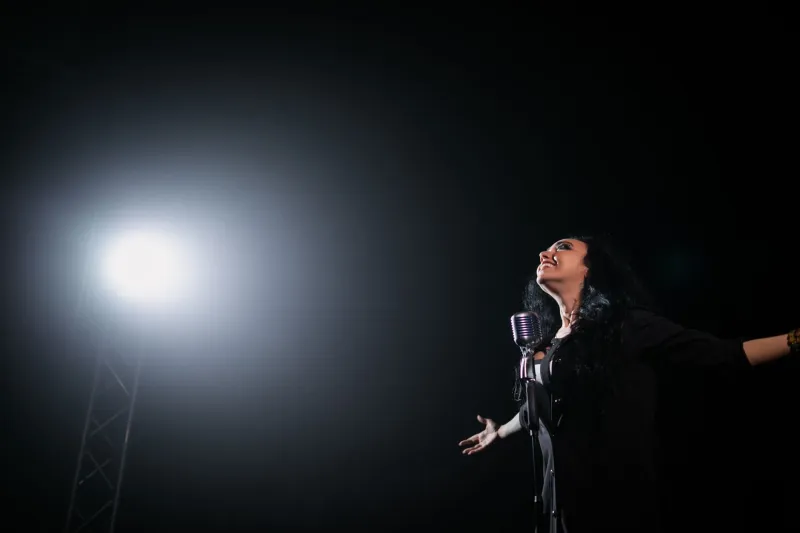
Soul, as I understand it, is the quality of presence that makes an audience feel they are witnessing something genuine rather than something constructed. It is the audible evidence that the person performing has actually lived inside the emotional territory they are navigating onstage. It is the difference between a technically flawless rendition and a performance that stops the room.
This is not a mystical property available only to certain gifted individuals. It is the natural result of an artist being willing to bring their full, unguarded self into contact with their material. It requires vulnerability. It requires the courage to be seen — not as a brand, not as a carefully curated persona, but as a human being with genuine experiences and genuine feeling.
That kind of courage is increasingly rare, and I think the reason is that the current entertainment ecosystem actively penalizes it. Vulnerability is difficult to package. Rawness does not always photograph well. The artist who is willing to fall apart in public, who is willing to let a performance be imperfect and real, takes a risk that the algorithm does not reward in any reliable way.
And yet. The performances that people talk about for decades — the ones that get passed down as touchstones, that get described with the particular reverence reserved for things that changed someone — are almost always performances characterized by exactly that quality.
The Audience Knows
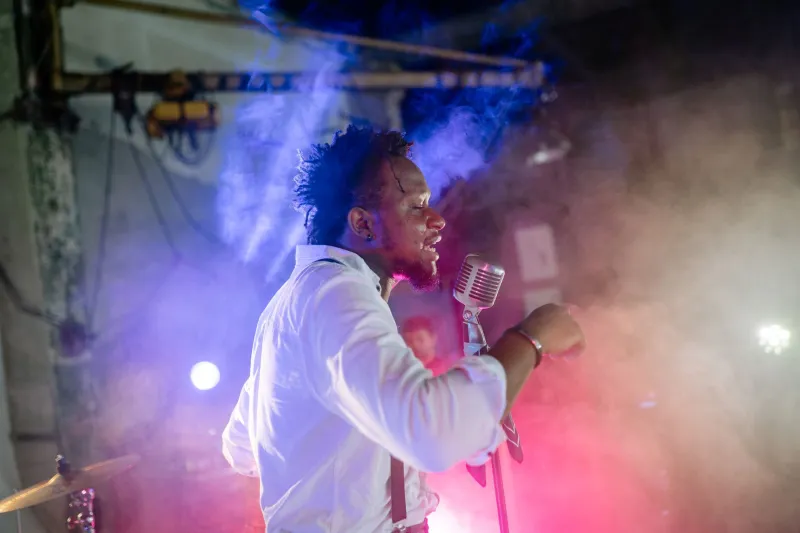
Here is something I have observed consistently across my years of performing: audiences are more perceptive than we give them credit for. They may not always be able to identify what they are responding to, but they feel the difference between an artist who is present and one who is performing the idea of presence. They feel the difference between a song that was written from the inside of an experience and one that was assembled to approximate an experience.
This perception operates below the level of conscious analysis. It is felt rather than reasoned. And it is why a technically lesser performance can sometimes move a room more profoundly than a technically superior one. The audience is not only evaluating craft — they are evaluating contact. They are asking, in the way that human beings have always asked of storytellers: Do you mean this? Are you actually here?
When the answer is yes — when an artist is genuinely present, genuinely invested, genuinely offering something that cost them something — the audience responds with a quality of attention and emotion that no algorithm has ever been able to manufacture.
A Manifesto for the Artist Who Refuses to Be Reduced
I am not arguing against learning the tools of the current landscape. Understanding how platforms work, how to reach an audience, how to navigate the business of modern entertainment — these are legitimate and necessary competencies. Refusing to engage with them is not artistic integrity; it is simply impracticality.
What I am arguing for is the maintenance of a clear internal hierarchy. The craft comes first. The truth of the work comes first. The emotional honesty comes first. The distribution strategy serves those things; it does not replace them.
The artists who will matter in twenty years — the ones whose work will still be played and discussed and felt — will be the ones who understood that the audience's hunger for genuine human connection is not a trend. It is not a demographic. It is not a content category.
It is the oldest thing in the room. And it is still, after everything, the most powerful.