The Performer Behind the Profile: Why the Stage Knows You Better Than the Algorithm Does
Somewhere between the green room and the grid, something gets lost.
I have watched artists—gifted, serious, committed artists—walk offstage after a genuinely moving performance and immediately begin calculating how to clip it for a fifteen-second reel. The performance hasn't even finished breathing yet, and already it is being repurposed, compressed, and optimized for a platform that will reward it or bury it based on criteria that have nothing to do with artistry.
This is the world we are working in. And I am not here to pretend otherwise.
But I am here to argue that the conflation of stage presence and social media performance is one of the more quietly damaging developments in contemporary American performance culture—and that artists who recognize the difference will ultimately build something more durable than those who don't.
Two Very Different Kinds of Performance
Let us be precise about what we mean by each term, because the confusion begins with the language.
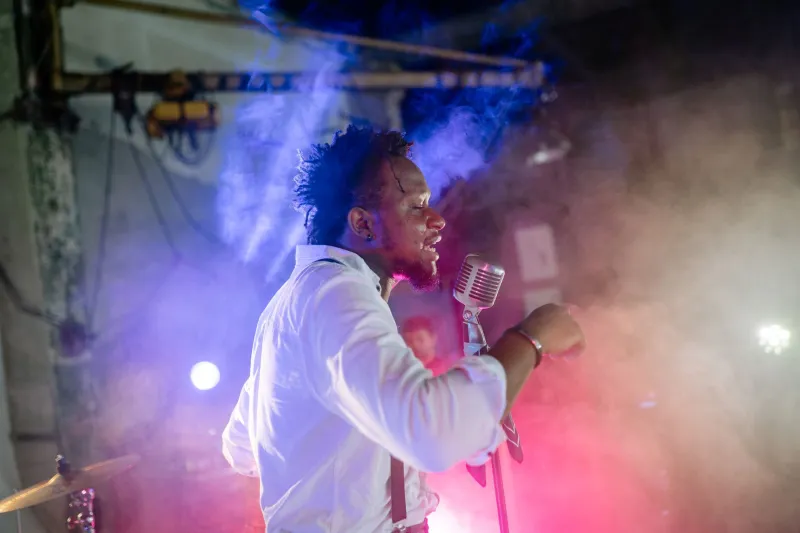
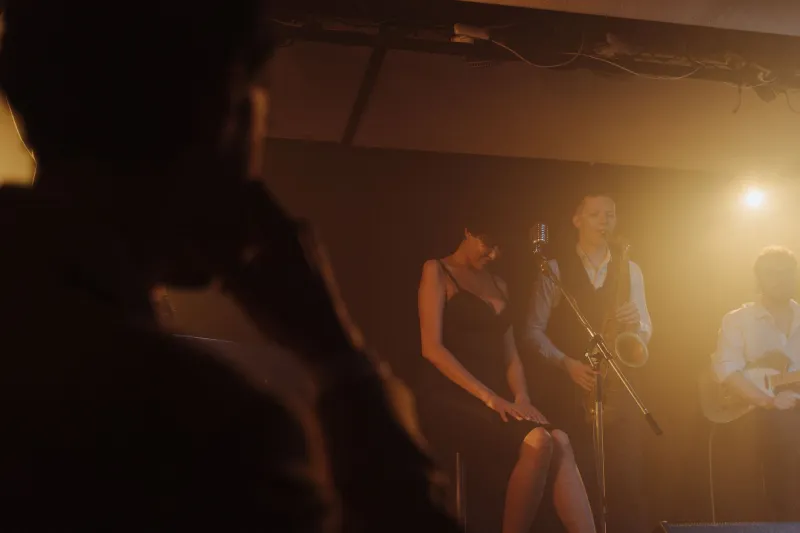
Stage presence is relational. It is what happens in the space between a performer and an audience that is physically, emotionally present. It is responsive, unrepeatable, and deeply human. It depends on breath, silence, eye contact, the particular energy of a specific room on a specific night. A performer with genuine stage presence doesn't simply deliver a set—they create a shared experience that the audience carries home with them.
Social media performance is curatorial. It is what happens when an artist constructs a version of themselves for consumption by an audience they cannot see, in a context they cannot control, competing for attention against an infinite scroll of other content. It rewards a particular kind of confidence—the confidence of the camera-ready, the aesthetically consistent, the algorithmically legible.
These are not the same skill. They are not even closely related skills. And yet the industry increasingly treats them as interchangeable, or worse, treats the second as the prerequisite for the first.
The Myth of the Viral Launchpad
The narrative is seductive: an artist posts a clip, it catches fire, millions of streams follow, a career is born. This does happen. It happens with enough regularity that it has become the dominant mythology of contemporary music discovery in the United States.
What the mythology omits is the far more common outcome: the clip performs well, the artist gains followers, and then—nothing. Because followers are not fans. Attention is not devotion. And a profile that generates impressive engagement metrics does not automatically translate into an audience that will buy tickets, travel to shows, and return year after year because your music has become part of the fabric of their lives.
The artists who built those kinds of fanbases—the ones that sustain careers across decades—largely did so through the unglamorous accumulation of live performance. They played small rooms in cities nobody cared about. They drove their own equipment. They looked people in the eyes from a stage and gave them something real. And those people told other people, not with a share or a like, but with the specific language of genuine enthusiasm: You have to see this person live.
That sentence has launched more lasting careers than any algorithm.
What Gets Distorted in the Translation
The deeper concern is not simply that social media is an imperfect vehicle for artistic expression—it is that the pressure to perform for digital platforms actively shapes how artists develop, often in ways that undermine their live work.
When a young performer spends more time rehearsing content for their phone than rehearsing for a stage, the priorities reveal themselves in the work. The gestures become camera-optimized rather than audience-optimized. The emotional arc of a performance gets compressed to fit the attention span of a scroll. The willingness to sit in a difficult, quiet moment—the kind of moment that can make a live performance genuinely transcendent—gets trained out of the performer because silence doesn't play well in a reel.
There is also the question of authenticity, a word that has been used so promiscuously in digital culture that it has nearly lost its meaning. But in the context of live performance, it retains its full weight. An audience in a room with you knows, at some level they may not be able to articulate, whether you are present or performing the idea of presence. That distinction is not detectable through a screen. It is only felt in person. And it is the most powerful thing a performer can offer.
Reclaiming the Room
None of this is an argument for ignoring digital platforms. They are real, they matter, and a working artist in contemporary America cannot afford to be entirely absent from them. The question is one of proportion and priority.
The artists who navigate this most effectively tend to treat their social presence as a document of their live work rather than as a parallel performance. They share because they want to invite people into something that already exists—not because they are constructing an identity for consumption. That orientation, subtle as it may seem, produces content that feels different because it is different. It carries the residue of real experience.
More importantly, they protect the integrity of their live performance as the primary expression of their artistry. They understand that the stage is not a content opportunity. It is the work itself.
Your best self—the version of you that moves people, that makes them forget where they are, that gives them something they will remember long after the evening ends—may never go viral. It may never be shareable in any meaningful sense. It may only exist in the specific, irreplaceable moments when you and an audience are in the same room, breathing the same air.
That is not a limitation. That is the gift.
Protect it.